
Blaine County Release Photo Records
A booking photograph is created during intake at the Blaine County Detention Center. Idaho law requires a photograph during booking, but that rule does not automatically make every image open for all purposes or guarantee online access. The sheriff currently displays photos in its live current roster and Recent Arrests feed. Disclosure of an older image remains subject to Idaho public-record exemptions, redaction, and the custodian's review.
The photograph speaks only to identity at booking. It does not prove guilt, a case result, or release. For a recent release, pair the image with the exact Release Date and time on the county row. For an older event, pair a requested photo with the booking and release record. The image may survive after the online row ages out because the feed's observed four-day window is not the county's legal retention schedule.
Blaine County Mugshot Channels
Not every custody system supplies a photograph, and each source answers a different question. Start with the official county source that matches the booking. Do not substitute a registry image, news image, or copied snapshot for the release record.
| Channel | Photo? | Access and limit |
|---|---|---|
| Blaine Recent Arrests feed | Yes | Best official route for a recent released row; visible only during the rolling window. |
| Current detention roster | Yes | Shows current custody identity, but does not establish release. |
| Sheriff records request | Possible | Ask for an older booking image with the release record; exemptions may apply. |
| IDOC Resident/Client Search | No routine photo | Use for state status and dates, then ask Records Information whether an intake image is releasable. |
| Idaho registry | Limited | Current photo only for people with a separate legal registration duty. |
| News or press release | Sometimes | May preserve an arrest image, but the story's custody claim is true only as of publication. |
| Third-party snapshot | Sometimes | Unofficial, possibly stale, and never proof of release. |
VINELink is designed for custody information and alerts, not as a dependable Blaine County booking-photo archive. No official sheriff inmate mobile app was verified. GettingOut serves communication and visitation functions, not public release-photo discovery.
Blaine County Recent Photo Feed
The official Recent Arrests page leads to a live feed that mixes current and released entries. Research observed about four days of rows. A released row retains the booking photo and adds an exact Release Date and time. Use the photo with name, age, hometown, offense text, arresting agency, and Booking Date to distinguish people who share a name.
The separate current roster also shows photographs, but its role is different. It can establish that a person was shown in current county custody. Disappearance does not establish release because a row may age out, data can change, or the person may transfer. For the same-day timestamp method, use the Blaine County 24-Hour Releases page.
No sheriff jail-information app was found. County social links and communication vendors should not be described as mugshot lookup tools without official evidence.
Request Blaine County Booking Photos
When the feed no longer shows the row, use the sheriff's written public-records form. Although the county labels the form FOIA, Idaho public-records law governs the local request. Keep the request narrow so the custodian can locate the existing booking event without searching a broad investigative file.
- Provide full name, date of birth, approximate booking date, and arrest location.
- Add the BCSO case number if known. A court case number alone does not identify the sheriff's record.
- Ask for the booking photograph plus Booking Date, Release Date and time, release type, and nonexempt destination.
- Select mail, pickup, or email delivery and complete the required residency declaration.
- Ask for a cost estimate before paid work and accept any lawful exemption or redaction decision.
The county gives resident and nonresident response bands and may charge after stated labor or copy thresholds. The current fee resolution lists resident administrative labor at $36 per hour, attorney review at $67 per hour, copies at $0.10 per page, and electronic delivery or media at $10. Nonresident labor rates are higher. Verify the current resolution before relying on a cost.
Municipal police may own the incident report even though BCSO holds the jail booking record. Ask BCSO for its photograph and release entry; route a separate arresting-agency report to that agency.
Blaine Mugshots Beyond Official Records
Local news reports and sheriff press releases sometimes include an arrest image. Their custody language reflects the publication date and cannot confirm a later departure. Match any old image back to an official booking or court record before drawing a conclusion. A press release may also omit later dismissal, sealing, or sentence events.
Third-party mirrors can preserve snapshots after the official feed changes. They are not authoritative and may be stale, incomplete, or linked to the wrong person. Commercial mugshot publishers and paid removal services are not endorsed or linked. An unofficial image should be treated as a lead for an official request, never as proof that Blaine County released someone.
The ordinary IDOC search is also not a hidden photo source. It can show state custody, supervision, sentencing county, and discharge information, but no routine resident photograph. A focused IDOC records request may ask whether an intake image is releasable without assuming that it is.
Blaine Mugshots After Court Shielding
Idaho's Clean Slate process shields qualifying court records rather than destroying every agency record. The Idaho Courts Clean Slate page describes eligibility and the petition process. A shielded case can disappear from ordinary public court results while a sheriff booking record remains subject to its own retention and disclosure rules. Sealed cases and exempt data are governed by Idaho Court Administrative Rule 32.
If a court grants relief, send the order to the office that controls the image and ask how it affects public display. Do not assume the court, sheriff, news publisher, and copied source update at the same time. No enacted Idaho-specific anti-pay-to-remove statute was located in the research. That negative finding is not legal advice and does not validate a commercial removal demand.
Idaho Registry Photo Limits
The Idaho Sex Offender Registry includes a current photograph only for a person who has a legal duty to register. It is not a general database of released Blaine County inmates. The registry supports name and location searches, yet a registry result does not establish the date of a county-jail departure.
The source also carries restrictions against harassment and misuse. Keep the purpose narrow: verify whether a legally required registration entry exists and compare identity through official records. Most released people will have no registry entry at all, and the lack of one says nothing about their release status.
Idaho Photo Access Boundary
The Idaho Attorney General public-records resources outline the statewide access framework used when a custodian reviews a photo request.
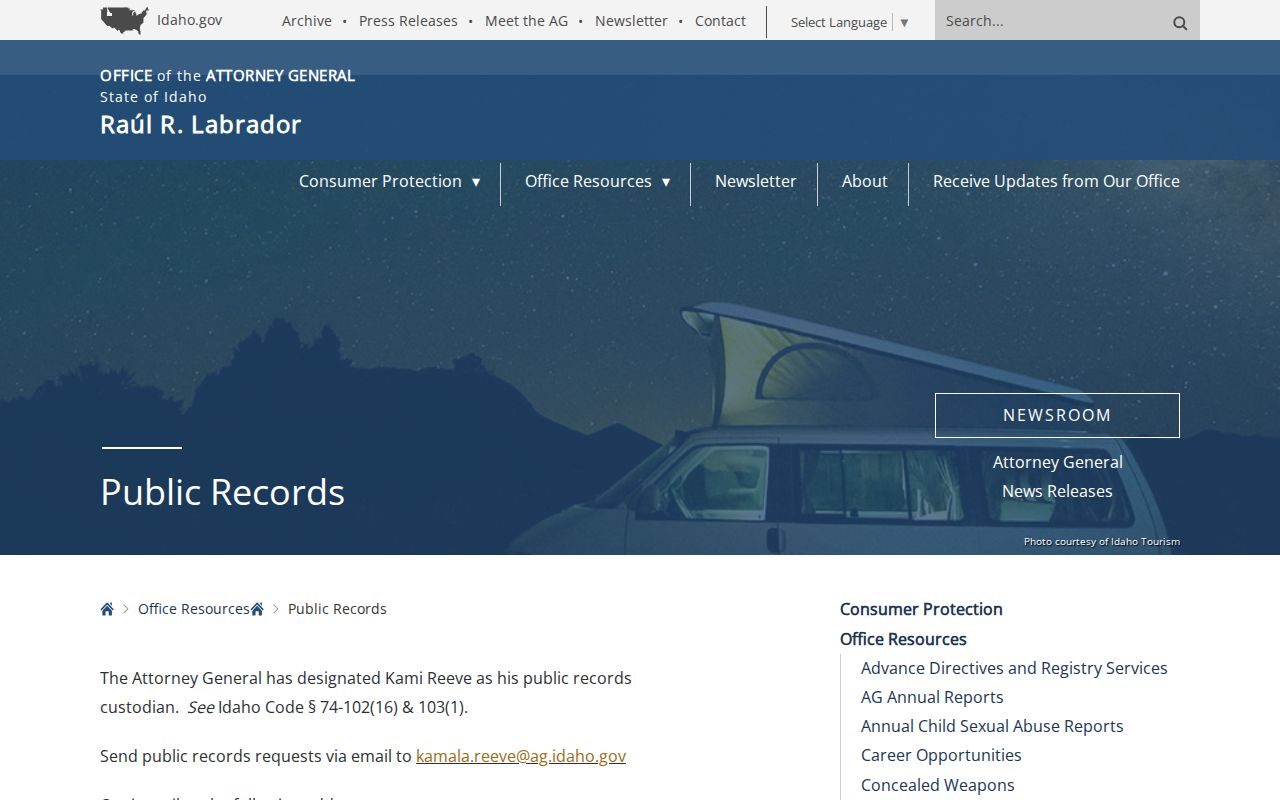
The captured resource supports the request route, while the Blaine County sheriff remains the custodian to ask about its own booking image.
Idaho Code §74-102 establishes a right to inspect and copy public records subject to the chapter's limits. Fees and response periods are addressed separately, and exemptions can still protect all or part of an image. A denial or redaction should be read on its stated grounds. The booking-photo requirement does not cancel privacy, safety, investigative, juvenile, or court-access limits that may apply to a specific record.
Blaine Mugshot Versus Release Proof
A photograph and a custody status should never be merged into one claim. The image proves that a booking image was associated with a record. The recent feed's Release Date and time proves BCSO recorded departure. The release disposition or destination explains whether that departure was bond, time served, sentence completion, another community route, or a transfer that kept the person in custody.
For a transfer to IDOC, search by name or IDOC number and compare sentencing county and case number. “In community” indicates an active supervision relationship, while a dated Discharged result supports sentence completion. For an outside-agency or ICE hold, seek the destination and then use that agency's source. A county mugshot does not become a state or federal release record merely because the person left Blaine custody.
iCourt can explain the order or disposition behind the event. It may also show that a case was later dismissed, sentenced, shielded, or sealed. The court event can precede jail processing, so pair it with the exact physical departure time rather than assuming both occurred at once.
When the image is needed to distinguish two records, explain that purpose in the request. Supply the date range and identity facts already known. Avoid seeking a broad case file when the booking photo and release entry will answer the question. Narrow terms reduce the chance of pulling unrelated investigative material and make it easier for the records custodian to state which part is open, redacted, exempt, or no longer available.